If you’re thinking about installing solar panels in Essex, a common question we get asked is “Do solar panels still work in winter?”
With shorter days and colder temperatures, it’s natural to wonder how much energy you’ll actually generate. Here’s how solar panels perform in winter, what impact snow and cloud cover can have and how to get the best results in the winter months.
So, Do Solar Panels Work in Winter?
In simple terms, yes, solar panels do continue to work throughout winter.
Solar panels produce electricity from light, not heat, so cold weather doesn’t prevent them from working. In fact, solar panels can work more efficiently in cooler temperatures. Winter output is mainly reduced due to shorter daylight hours and the sun being lower in the sky. Cloudier days are more common throughout winter, too, which can lower generation.
How Much Does Winter Affect Solar Output?
In winter, solar panels naturally generate less electricity because:
- Days are shorter
- Sunlight is weaker due to lower sun angles
- Cloud cover is more frequent
For example, a typical 3.5kW system may produce around 362kWh per month in summer, but closer to 52kWh per month in winter. Even with reduced output, solar can still offset your electricity bills, especially if your home uses electric heating.
Tip: Pairing solar panels with battery storage helps you use more of your own free electricity, day or night. In winter, a solar battery can also be topped up using cheaper off-peak tariffs to reduce your bills further.
Do Solar Panels Work in Snow?
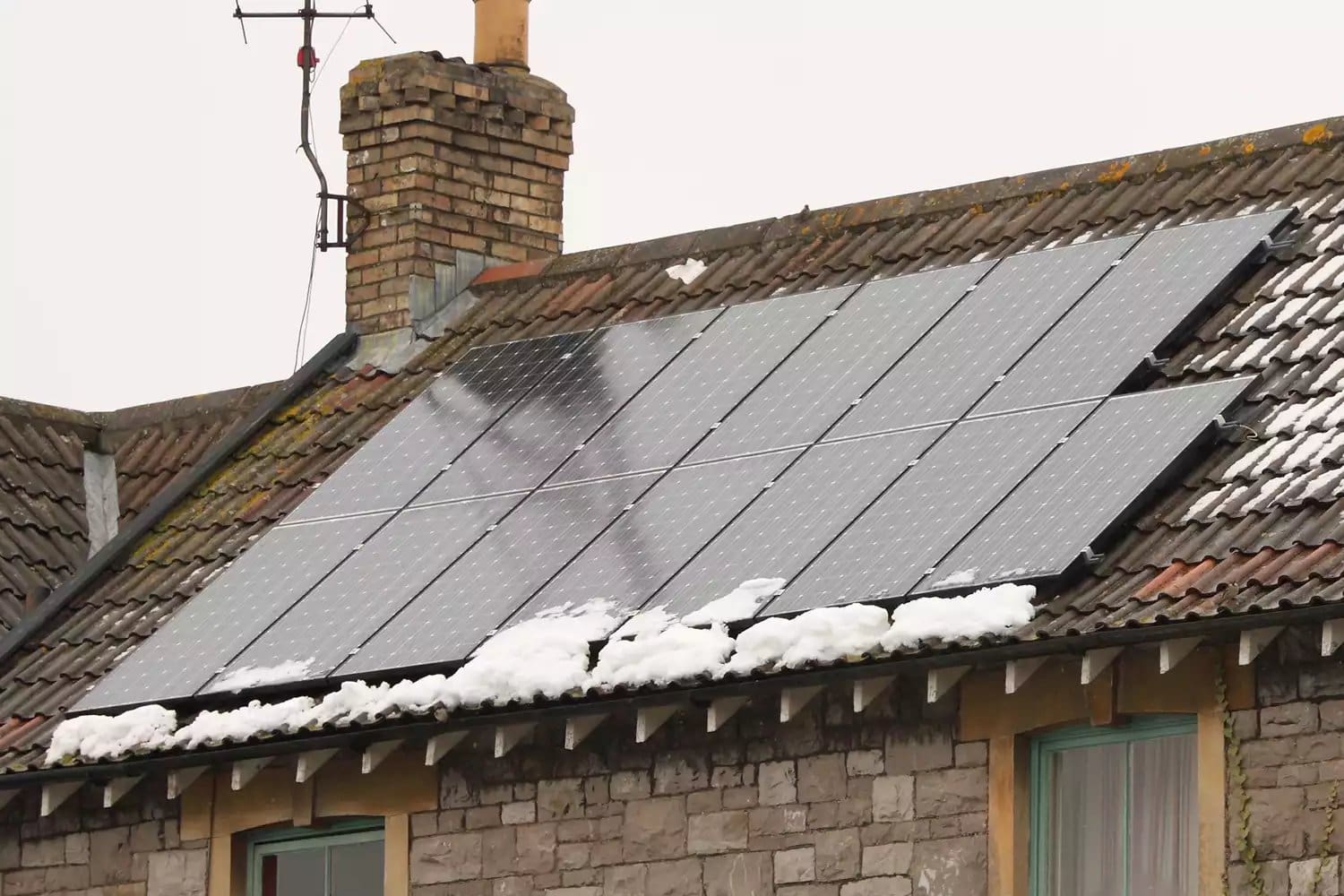
Solar panels work in snowy conditions, but output will depend on how much snow accumulates on their surface. Light snow, which Essex typically gets, melts quickly and rarely causes issues. Heavier snow can block sunlight temporarily and reduce output, but it is uncommon in Essex. Once the snow melts, it can even clean away the panels of dirt and dust, improving performance.
Best Time of Year for Solar Energy
The most productive months for solar are May to July, with longer days and less rainfall. November through to January sees solar production at its lowest with fewer daylight hours and more overcast days. Despite this, even in winter, your solar panels will continue to work hard, generating free electricity for your home, helping lower electricity bills and reducing reliance on expensive grid electricity.
How to Improve Solar Performance in Winter
- Clear heavy snow if possible to avoid blocking sunlight from getting through
- Use high-energy appliances during the day while your electricity is being generated
- Add battery storage to store surplus electricity for use in the evenings
Start Your Solar Journey
Even with the natural seasonal dip in energy production, solar panels remain an excellent long-term investment for Essex homeowners. With rising electricity prices, there’s never been a better time to move towards renewable energy.
If you’d like a free, bespoke solar design and quote tailored for your home and energy use, get in touch today.
Solar on your roof. Power in your hands.